
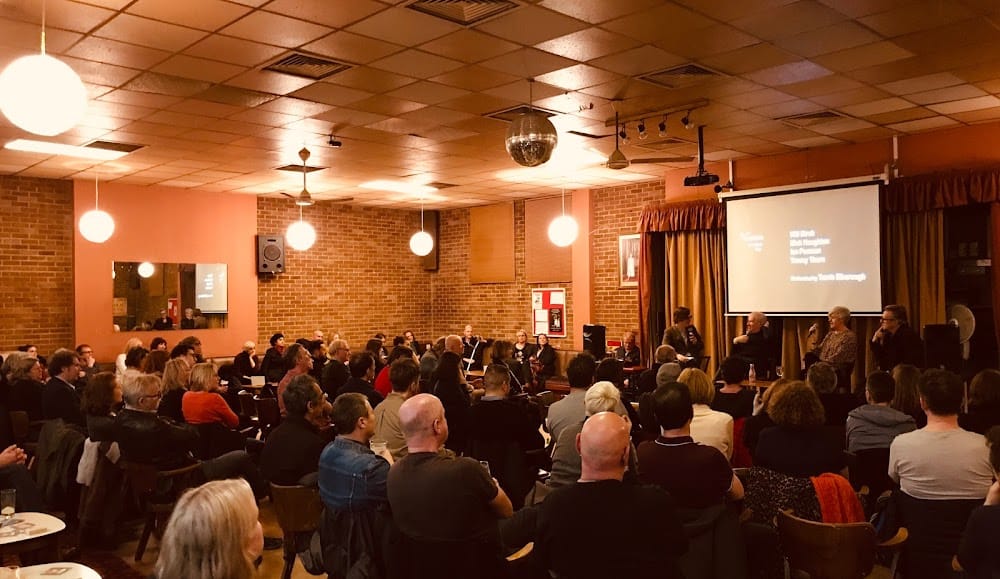
Club Secretary Esme Irani first started coming to the club after her local venue closed – a persistent trend for cultural spaces in the capital. While the space was pleasant, it was not yet the lively hub of events and activity that it has since become.
One of the key strengths of member-owned clubs is that members are able to bring forward ideas and see them put into practice. This openness to trying new things has played a major role in the club’s growth. As new people join, they quickly discover that they can contribute to shaping the club’s activities and atmosphere, which has helped create a strong sense of ownership and community among members.
Before becoming Club Secretary, Esme volunteered through the club’s events committee. In that role she introduced new ideas and helped establish a programme of LGBTQ-inclusive events that now feature regularly in the club’s busy calendar. These events have helped attract new audiences and broaden the club’s appeal beyond its traditional base – this is particularly important in a city which has lost over half of its LGBTQ+ venues since 2006. Other new members have also brought events with them from venues where they previously ran or attended them but felt less supported, further diversifying the club’s programme.
The club’s annual general meetings provide another clear reflection of this active membership culture. These meetings typically attract around 100 attendees, with members raising questions, proposing ideas, and contributing to discussions about the club’s priorities and future direction. Importantly, participation is not limited to a small group of long-standing members. Newer members also attend and take part in debates, demonstrating both their investment in the venue and their willingness to contribute to its development.
At a time when many local institutions struggle to recruit volunteers for governance roles, social clubs can offer a more accessible pathway into participation. The informal and familiar environment of the club often makes it easier for people to step into responsibilities such as committee membership, event organising, or financial oversight. For individuals who may never have considered becoming a trustee of a charity or serving on the board of a community organisation, the club can provide a first experience of collective decision-making and organisational leadership.
Over time, this participation can help members develop practical skills in governance, finance, event management, and community organising. In doing so, clubs can act as small but important incubators of local leadership, creating opportunities for residents to build confidence and experience in shaping the institutions that matter to their communities.