
Photography / Publocation

Rowland Road Working Men’s Club

Beeston, Leeds, West Yorkshire

Location

~400

Membership

n/a

Turnover (2024)

Social clubs were often founded because people saw the need for a space to meet and socialise that wasn’t currently there. Rowland Road Working Men’s Club, located in South Leeds, was founded for this very reason in 1911 because a local group of men, who used to meet in a local hostel, wanted to start their own club.

More than 100 years later, Rowland Road is working in partnership with a range of local stakeholders to deliver another space needed by the community – a safe space for children to play. With a much higher percentage of people living in flats, the area’s families faced limited access to green spaces.

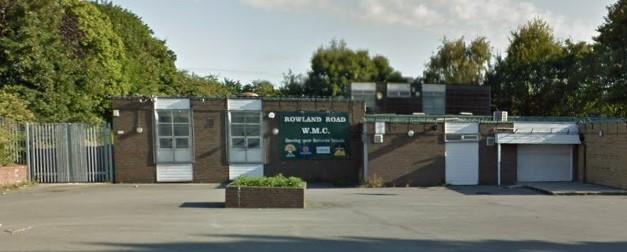
The club itself appears deceptively small, occupying a number of low 1970s buildings, but it offers a range of spaces inside to meet the varied and changing needs of the local community.

Jo Firth has been going to the club since she was 17 years old, later bringing her children in, working behind the bar, and eventually becoming the Club Secretary in 2010. She describes the club as a big family where everyone is there for each other, but that doesn’t mean the club doesn’t try to expand that family and welcome opportunities to partner with new stakeholders in the community.

When two local parents couldn’t find a suitable place for their child to play freely in the local area, they approached Ed Carlisle, a local Green Party councillor, to help find a solution. Working together, they identified a disused piece of land behind the Rowland Road Working Men’s Club and approached the club about developing this into a play space.

Since then, the club has been working in partnership with multiple stakeholders, including Yorkshire Contemporary, a local arts organisation curating the project, and members of the local community to transform the land into a Play Patch for children and families in the local area.

The club’s members are invested and heavily involved in the Play Patch project. Over 1,300 people in the community – over half being children – have contributed to its creation. Integral to its success, the club’s members volunteer their time through gardening, building, and maintenance, and they also manage the volunteer calendar and promote it through social media and their wider community networks.

The Play Patch offers more than just a space to play, as it creates a site for different groups to come together and offers facilities that other spaces often can’t. Despite their necessity, other types of social infrastructure don’t always offer the use of their toilets to the public, but Rowland Road partially opens the club so that visitors to the Play Patch and volunteers can access toilet facilities.

Bringing such openness means that new people have discovered the club as visitors to the Play Patch. Once these newcomers step inside the club, they see how surprisingly large it is with its many facilities, such as its games room with darts and snooker tables and 350 capacity concert room, but more importantly, they witness how its members watch out for the children in the community, ensuring that they play safely inside and outside the club.

21st Century Social Clubs is a project of Stir to Action Ltd, a worker co-operative registered in England as a Company Limited by Guarantee. Company number 07951013

Designed and built by Guillermo Ortego

You can subscribe to our newsletter here

21st Century Social Clubs is a project of Stir to Action Ltd, a worker co-operative registered in England as a Company Limited by Guarantee. Company number 07951013

Designed and built by Guillermo Ortego

You can subscribe to our newsletter here

21st Century Social Clubs is a project of Stir to Action Ltd, a worker co-operative registered in England as a Company Limited by Guarantee. Company number 07951013

Designed and built by Guillermo Ortego