
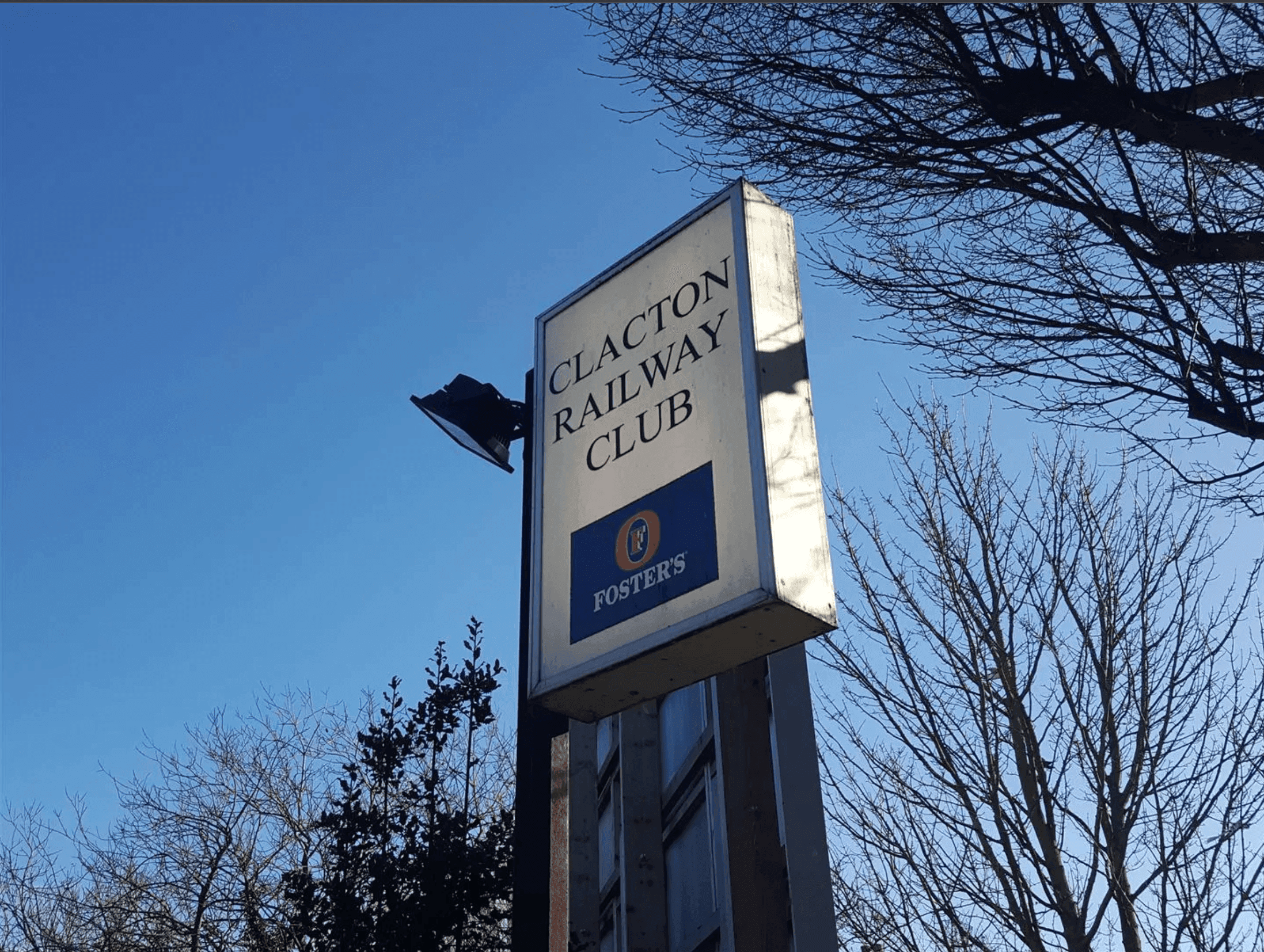
Social clubs are places where members look out for each other, and people notice when a regular isn’t around. Being in a known community is essential for people’s feeling of personal safety, and the regular – often weekly – use of clubs by its members builds strong social bonds that are more rarely found in other community spaces.
Clacton Railway Social Club takes this a step further through their voluntary Welfare Officer role, which looks after the wellbeing of their members. As part of this role, the officer arranges visits to members in hospital with a card and a £25 donation as a gesture of support.
But looking after members isn’t just the role of the Welfare Officer – the club’s committee, particularly Club Secretary Alan Kirkham and Vice-Chairperson Wendy Haywood constantly demonstrate their genuine care for members. Alan started out playing darts in the club because there was nowhere else to go in town. He was asked to join the committee and then was elected Secretary nearly 10 years ago. Now he runs the club day-to-day.
And beyond the committee, the 1800-strong membership – which increased by 700 members last year – creates an environment where people feel it’s more acceptable to ask for support than in public or private spaces.
The regular and informal ways that the club looks after its members helps create a sense of community and support that people may not have in other areas of their lives, particularly during difficult times, when they are experiencing illness, social isolation, and the loss of a partner or family member.
In one week, four of the club’s members passed away, and Alan went to visit a recently widowed member to speak about her husband’s wake that the club was arranging and hosting free of charge. According to Alan, “She was happy and said ‘nobody else would do this for me.’” Wendy also attends members’ funerals when possible to show the club’s support.
This level of mutual care also applies to the club building itself. The club’s operations are supported by its network of members, who contribute their skills and time. For example, an electrician member carries out the club’s safety checks in return for a small annual honorarium. Others help as needed. Some members assist in the kitchen because they see it as their club, while others carry out minor repairs such as fixing walls or roofs in exchange for a couple of pints.
Beyond its own members, Clacton Railway Social Club has a strong sense of its role in the wider community. For local groups and charities raising funds, the hall is made available free of charge. On average, there are three or four fundraising events each year, with a recent event fundraising for a new minibus for Shorefields Special Needs School, which serves 159 pupils aged 3 to 19. It also hosts bingo and “Bongo” nights to raise money for a charity supporting children with cancer.